Friday, April 28, 2006

Podcast advocacy

Spotted an interesting use of podcasting in an advocacy e-mail.

The e-mail, sent by the organization Common Cause, focused on the ups and downs of a lobbying reform bill now being considered by Congress. The bill was unexpectedly pulled from the House floor yesterday after Republicans disagreed over how much reform was actually needed. The bill is expected to be reintroduced next week.

Common Cause, which supports stronger reforms, included this postscript in its e-mail:

P.S. Listen to a podcast from the head of our ethics team, Mike Surrusco, describing what happened in the House yesterday.

A look at the Common Cause blog (yes, they have a blog too) revealed it was the organization's first national podcast. It's short...just a minute or so long...which makes it easy to take a moment and listen to Mike Surrusco's take on the lobbying reform bill.

I think it's a good use of a new medium. Bet we'll be seeing (and hearing) more like this.

Wednesday, April 26, 2006

The other shoe

As JMC Prof. Bill Tillinghast put it in an e-mail this afternoon, "the other shoe has dropped."

The San Jose Mercury News, along with three other major former Knight Ridder newspapers, has been purchased from The McClatchy Co. by the MediaNews Group Inc. and Hearst Corp. for $1 billion in cash. The deal lets McClatchy make a $1 billion dent in the $4.5 billion debt incurred when it purchased Knight Ridder. (Link to McClatchy's news release on the sale.)

MediaNews will get the San Jose Mercury News and Contra Costa Times, and Hearst, which also owns the San Francisco Chronicle, will get the Monterey (Calif.) Herald and the St. Paul Pioneer Press in St. Paul, Minn. According to a story posted today on the MercuryNews.com, MediaNews also is acquiring Knight Ridder's smaller Bay Area publications, such as the Palo Alto Daily News group and the Silicon Valley Community Newspapers.

One of the largest newspaper companies in the United States, the MediaNews Group owns newspapers throughout California, the Rocky Mountain region and the Northeast.

When MediaNews Chief Executive Dean Singleton spoke to the Mercury News staff today, he was joined by Knight Ridder CEO Tony Ridder. According to the MercuryNews.com article, Singleton said:

"While McClatchy may be buying Knight Ridder, we're getting the flagship and the crown jewel of Knight Ridder. I know how much Tony loves this newspaper. We will continue to make him proud as we go forward.''

To complete the complicated deal, the two companies will trade a couple of their current newspapers as well.

Former Mercury News columnist Dan Gillmor, commenting in his blog at backfence.com, called the MediaNews/Hearst deal "a smelly one" that "just reeks of possible collusion in the marketplace."

Advertising trend-setter?

A new online video advertisement is getting a lot of attention. Some ad experts are already calling it a classic. Here's the link to check it out. (Warning, it's addictive!) While you're there, check out ad producer Albino Blacksheep for a blog with links to other online videos and Flash tutorials.

Here's some background information on the ad (and thanks to Bob Rucker for sending this info to me):

The ad was produced for Honda. Everything you see happened in real time, exactly as you see it. The film took 606 takes. Every time something didn't work, they had to set it up all over again.

The film cost $6 million and took three months to complete, including full engineering of the sequence. Since it's two minutes long, every time Honda shells out big bucks every time it airs on British television. However, since it is fast becoming the most downloaded advertisement in Internet history, Honda executives figure the ad will soon pay for itself simply in "free viewings."

Friday, April 14, 2006

Matchmaker, matchmaker, make me a match

Here's an interesting idea...a syndication service that matches bloggers with web sites, including online news sites, that want content. I spotted a link to it on MediaShift, a PBS-affiliated blog by journalist Mark Glaser that looks at "how new media—from weblogs to podcasts to citizen journalism—are changing society and culture."

The syndication service is called BlogBurst. It offers bloggers the opportunity to increase their "visibility, audience reach and traffic," while providing online publishers with access to interesting and timely content in the form of blogs. Publishers listed as currently trying out this service include the San Francisco Chronicle, washingtonpost.com and Gannett. Interesting, eh?

BlogBurst says it is currently looking for blogs that deal with topics such as: travel, women's issues, technology and gadgets, food and entertainment, and local metro areas. It has plans to expand that list.

BlogBurst says it is looking for blogs that offer:
  • Unique perspectives that add a distinctive voice to feature content
  • Topical, vibrant and timely content that complements existing (web) site content
  • Ethical and fair writing that doesn't put the publisher in a compromising position
Sounds a lot like good journalism, doesn't it? Could this be the next wave of freelancing?

And here are some of the things BlogBurst says online publishers don't want: spam, pornography, hate speech, libelous content, material that violates copyrights, excessive errors in spelling and grammar (I wonder how many "excessive" is), or excessive swearing or profanity (ditto).

I think this might be an idea whose time has come. A number of serious bloggers are looking for ways to make blogging pay, while online publishers need a steady source of fresh, topical content. And it's got to be a lot cheaper to syndicate a few bloggers than it is to pay full-time staff to blog, right?

Wednesday, April 05, 2006

Are we safer in the dark?


Concerned about government secrecy, domestic spying and the like? Take a look at this video, produced by openthegovernment.org as part of national "Sunshine Week," held in March.

The goal of Sunshine Week is to "raise awareness of the importance of open government to the public."

Sunshine Week is co-sponsored by the following organizations:

American Association of Law Libraries
American Library Association
American Society of Newspaper Editors / Sunshine Week
Association of Research Libraries
Coalition of Journalists for Open Government
League of Women Voters
National Freedom of Information Coalition
OpenTheGovernment.org
Special Libraries Association

Openthegovernment.org focuses on issues related to: democracy; environment, health and safety; national security; and government accountability. In particular, it has an array of information and resources related to the Freedom of Information Act (FOIA) and the NSA's domestic spying program.

Tuesday, April 04, 2006

Viral attack ads

It looks like Chevrolet's attempt at viral marketing is giving the automaker a headache...and maybe a case of the sniffles too.

As reported by NYTimes.com, Chevrolet introduced a Web site a couple weeks ago that lets visitors "take existing video clips and music, insert their own words and create a customized 30-second commercial for the 2007 Chevrolet Tahoe."

Most likely, the company hoped people would create some fun videos and e-mail them around the Web, "generating interest for the Tahoe through what is known as viral marketing." That part of the plan apparently worked. There was just one problem: the Tahoe videos getting the most attention, and the widest distribution, are ones that diss the SUV.

For example, one ad that shows the Tahoe being driven through a sweeping desert landscape says, "Our planet's oil is almost gone...you don't need G.P.S. to see where this road leads." Another shows the SUV tooling down a country road lined with sunflower fields, jaunty music playing in the background, then white lettering appears on the screen: "$70 to fill up the tank, which will last less than 400 miles. Chevy Tahoe."

Ouch! The law of unintended consequences strikes again.


Monday, April 03, 2006

Who needs ink?

If, like me, you were out of town over spring break and couldn't attend "Who Needs Ink?" the March 30 Commonwealth Club forum on the future of newspapers, you can read JMC grad student Ryan Sholin's blog post on that event or listen to JMC Alum Steve Sloan's 13-minute edupodder podcast on it.

Sloan asked the panelists (including Joan Walsh of Salon.com, Jerry Ceppos and Dan Gillmor of the Center for Citizen Media) how journalism students should respond to a rapidly changing media environment. Here are a couple of excerpts:
"Learn how to be curious, how to think, how to ask good questions," said Gillmor, who advised students not to worry yet about what the medium will be, but to make sure they are "conversant, if not fluent, in different media formats, including audio, video and writing."

"There's always been uncertainty for journalism students," said Walsh, adding, "Go out and make yourself a great storyteller, and the rest will follow."

After the depressing uncertainty of the Knight Ridder buyout, I found their comments moderately encouraging. Maybe you will too.

Spring cleaning at NYT

The NYTimes.com has redesigned its web site, making it more interactive, more multimedia, and easier to navigate. They've also enlarged the page size to "take advantage of the larger monitors now used by the vast majority of our readers" (wish I was one of them).

NYTimes.com soon plans to offer readers a way to a customize their online news by setting up "a personalized page called MyTimes that will let you organize your favorite Web sources of information — from NYTimes.com and elsewhere — and view them at a glance." (Remember how several JMC students at the Jerry Ceppos lectures suggested more newspapers should be doing something like this? Great minds think alike!)

To read all about it, check out the "letter to our readers" from NYTimes.com's Editor-in-Chief Leonard M. Apcar...and let me know what you think. Do you think this redesign means print mediums like the NYT are really starting to "get" the full potential of the web, or do you think it's mostly window dressing?

Monday, March 27, 2006

The kiss of death

Remember how I told you plagiarism was the kiss of death for journalists and other media writers? Well, another plagiarist just bit the dust.

Blogger Ben Domenech was hired by the Washington Post to debut a new right-right political blog, Red America. He started Tuesday; by Friday, he was gone. Obviously, it doesn't take other bloggers long to suss out a plagiarist.

Here's Post Executive Editor Jim Brady's letter to the public about the Domenech's resignation, and here's an interesting salon.com interview with Brady about why the Post didn't figure it out first.

Given how easy it is these days to fact-check things online, it's a bad time to be a plagiarist.

P.S. You might also want to check out Poynter Online blogger Romenesko's take on this and other hot media topics.
UNH Journalism Program Links

The journalism program at the University of New Hampshire, where I got my BS degree way back in the old day, has a "no-frills" page of journalism links and resources for students, with tips on interviewing, finding story ideas, storytelling, and much more. Check it out. It also has a good resources page for journalists.

It's a small world...

As I headed down the escalator toward the baggage claim area in Manchester Airport Saturday evening, a man walking behind me asked, "Do you do a lot of editing?"

Apparently he and his seatmate had seen me grading papers on the plane. I told them I teach journalism and PR writing classes at San Jose State, and, yes, I do a lot of editing.

"Well, you're talking to a couple of ex-newsmen," he said, adding that he'd been an editor at a newspaper in San Diego. The other man, Jerry Ackerman, said he'd been an editor at the Boston Globe.

Hmm, my journalism professor when I attended UNH was a former Boston Globe reporter. Did he happen to know Andrew Merton? He did. In fact, Merton used to work for him.

I hope to catch up with Merton while I'm in New Hampshire this week (I'll need a break from helping clean out my parent's house) and if I do, I'll pass on a hello from Jerry Ackerman.

Monday, March 13, 2006

Out of the frying pan?

What's worse than being put on the auction block in the first place? How about being told you don't make the grade, and you're going to resold to pay the bills.

That's the situation the folks at the San Jose Mercury News found themselves in today. After perhaps feeling some initial relief that McClatchy, the well-regarded owner of the Sacramento Bee and 11 other U.S. dailies, had submitted the winning $6.5 billion bid for the Knight-Ridder newspaper chain, they found out that their new owner plans to reduce his debt load by selling off some of the less promising papers in the K-R chain...and that his list of losers includes the Mercury News.

That leaves them still hanging fire, and more likely to end up with an owner who will "slash and burn" the newsroom in an attempt to cut costs and pull more profits out of the paper.

In a briefing last week to JMC faculty on the impending sale of the K-R chain, Editor-in-Residence Jerry Ceppos voiced some of those kinds of concerns and listed what he considered to be the three most likely outcomes for San Jose and the Mercury News. He didn't envision this one.

But Ceppos did offer one suggestion that now seems prescient. No matter who buys K-R, he said, we should watch for two things: whether journalists end up near the seat of power, and how much debt the buyer must take on to complete the buyout. That's what will determine whether or not the K-R buyout turns out to be good for journalism, he said.

From that perspective, things aren't looking so good for San Jose and the Mercury News.

In an article in today's WSJ, K-R Chairman and CEO Tony Ridder acknowledges that the "uncertainty is not over" for the 12 K-R newspapers that will be resold, "and I regret that very much."

In the same article, McClatchy CEO Gary Pruitt said he did not anticipate having trouble selling those K-R newspapers, and that the proceeds would be used to pay down debt.


Sunday, March 12, 2006

At the end of the tunnel?

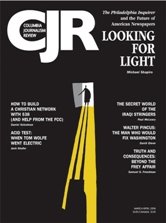
While we worry about how new owners could affect the quality of journalism at the Mercury News and other Knight Ridder newspapers, Michael Shapiro offers food for thought in the current cover article of CJR. In it, he tells how one of the top newspapers in the KR chain, the Philadelphia Enquirer, has fared under what KR's managment.

The upshot: it ain't pretty. Here's an excerpt from his article, Looking for Light:
The Inquirer, it was said in a tone used to describe a handsome friend who has not aged well, was not what it was.... No one was suggesting that the Inquirer had become a bad newspaper, far from it. But it had become duller — yet another newspaper whose occasional highs seemed to come at ever longer intervals. That judgment was rendered both from afar and from within the paper’s white tower of a home on North Broad Street.

The Inquirer had gone through three editors in the last six years, had by last summer seen its newsroom staff already reduced since 1999 from 600 to 500, and perhaps saddest of all, had gone from being perhaps the most alluring and electric place in the business to work to yet another newsroom where some young reporters wondered whether they would have been wiser to have gone to law school.

Shapiro, a writer and media critic, teaches at the Graduate School of Journalism at Columbia University.

New student journalism blog

Here's an interesting new blog/website hybrid, the Blue Plate Special, produced by NYU Journalism Prof. Jay Rosen and his Blogging 101 students. Each "edition" mixes blog posts, interviews and informational features on a single subject. They plan to publish this cross between an online magazine and a blog monthly.

Blue Plate Special No. 1 focuses on Newspaper Blogging: State of the Art and asks: "What happens when the people in the newspaper wing of the legacy media start blogging?" It includes a chart the Blue Plate Special team created on the state of blogging at America's 100 biggest newspapers, and a list of the best blogging newspapers in the United States.

I like this concept. What do you think of it?

More on Blogging

I've gotten some mixed feedback from journalism students (some posted, some in class) on my previous post on blogging, where I quoted newspaper executives at the recent Rethinking Journalism Education summit who said they'd give bloggers an edge when it came to hiring.

Some students view blogs as online personal diaries that are of little value to news audiences. Sure, there are lots of "online journals" out there, but many savvy media writers and media organizations are also experimenting with blogs in interesting (and, I would argue, valuable) ways. Here are a few examples:
  • The Editors Weblog, published by the World Editors Forum, offers "editorial solutions for the newspaper renaissance." It covers trends in news reporting, editing and news coverage worldwide.
  • NewMediaMusings, a blog by J.D. Lasica, former editor of the Sacramento Bee and now a writer, blogger, media consultant and director of Ourmedia.org, a grassroots citizen media project.
  • VisualEditors blog, the news editing and design network, offers comments and links to news on the media.
Public relations practioners and marketers are also figuring out the value of blogging. Here are some examples:
  • AdRants, a blog/website that combines commentary on advertising, marketing and media trends with "a pinch of attitude."
  • Church of the Customer blog, an informative (and self-promoting) blog by two marketers, Ben McConnell and Jackie Huba, on the effects of word of mouth on customer loyalty and "customer evangelism."
  • Micropersuasion, a blog by Edelman Senior VP Steve Rubel that "explores how new technologies are transforming marketing, media and public relations."
  • PR meets the WWW, a blog on public relations, communication, and the World Wide Web of new technologies, by Constantin Basturea, founder of NewPR Wiki and co-organizer of Global PR Blog Week.
You might also want to check out this recent PR Week article, Blogging becoming an asset in agency eye, by Keith O'Brien, who notes that PR agencies are hiring top bloggers. Here's an excerpt:
Has blogging changed from a liability to an asset in the PR job market?

During the nascent days of blogging, when both emerging and large corporations were firing staffers for blogging-related offenses, the jury was out on whether blogging was a nefarious habit, to be hidden when applying for jobs, or a positive career move.

The recent ascension of two high-profile bloggers - Steve Rubel, formerly of CooperKatz, and Jeremy Pepper, formerly of his own firm Pop PR, who were hired by Edelman and Weber Shandwick, respectively - suggests the negative valence of blogging has turned positive. Indeed, today's more pressing question isn't whether you can get a job if you blog, but, rather, whether you can get a job without a blog.

Well, the short answer is yes, but it's more complicated than that.... (direct link to the rest of this story)

It's still possible to argue that blogging is just the "fad du jour," but I think it's getting harder. I think blogging is a significant emerging medium. In fact, you could say blogs are to the World Wide Web what cable TV is to television. (Of course, you might argue that blogs are like HGTV and the Oxygen channel, not ESPN, HBO and MTV...and I'd probably agree.)

Let me be clear: this doesn't mean I think everyone should run out and become a blogger. That wouldn't work. My point is that we ignore emerging technologies (and new mediums) at our own peril.

The media world is changing and we've got to change with it...or be left behind.

Saturday, February 25, 2006

Blogging, anyone?

More missives from the Rethinking Journalism Education conference...

If he had two candidates who were equally well qualified, and one of them blogged, Howard Owens said he'd hire the blogger. Why?

"It indicates a passion about the web," said Owens, who is VP/Interactive for The Bakersfield Californian.

Bill Gannon, editorial director and managing editor of Yahoo! News said, "The great thing about blogging is that is reveals talent and passion."

Here are the kinds of candidates Chris Jennewein says he doesn't hire: "It's as if they have a vision of the way things were, not the way they can be."

What he wants is people who are risk-takers, says Jennewein, director of internet operations at the Union-Tribune Publishing Co., San Diego. He reminded educators at the Morro Bay conference that new types of media mean new opportunities for their students.

"Your students have got a great future," Gannon said. "I want you to be as encouraged about the future as we are. I think that the future is indeed incredibly bright."

Friday, February 24, 2006

What Media Employers Want

The Rethinking Journalism Education conference opened with a panel of media executives who told us what they look for in new hires. Here are the panelists and what they had to say:
Jennewein said he's looking for a "converged student" with demonstrated skills in the web medium, with strong writing and video skills, who knows how to tell stories, knows AP style.

Sandra Duerr wants entry-level reporters who can think visually and graphically, who understand how to deliver information, and understand business/economics.

Bill Gannon says critical thinking ability is most important. He notes all applicants to Yahoo's news division must take a copy editing test and a writing test, and be prepared to work in a time-shifting world.

Howard Owens says new journalists need to know how to interview people, gather documents, and structure a story. They need to be smart, honest, resourceful, and have good judgment. They also need to respect citizen journalism and see journalism as a conversation. He emphasizes they also need to respect ethics, because there's no room for dishonesty.

All agreed students need more than one internship to get the experience they need to hit the ground running at their first real media job.

When Dona Nichols of JMC asked what we're not teaching, what qualifications are missing for many entry-level media job candidates. Jennewein said he's looking for candidates who are versatile, risk-taking, and open to the possibilities out there in the media environment.

Owens added, "If students don't have the passion, the qualifications for journalism, encourage them to find another profession."

Salaries for entry-level reporters

Jennewein: multimedia specialists start from upper $20s to low $40s
Duerr: entry-level reporters start at $34,000-35,000
Gannon: news hires start in $40s to $50s..."depends on how bad I want them." Yahoo also offers stock options.
Owens: entry-level programmers and content producers (advertorial) start at $35-40,000 (that's more than entry-level reporters get in the newsroom)

Major Irony Factor

Here we are at Morro Bay for the "Rethinking Journalism Education" conference, focusing on how to prepare journalism students for a world of new media and new technology…and we can't access the web.

I'm told they're going to "turn it on" later in the conference. Apparently there is no free lunch…or free web access.

(Okay, now we're live)

Wednesday, February 22, 2006

Saving newspapers...or the news?

You've heard it before…continuing declines in newspaper readership and big drops in advertising revenues are prompting questions about the future of journalism and mass media.

Former Knight Ridder news executive Jerry Ceppos opened a series of discussion forums with JMC students this week by reciting some of those sorry stats. Then he asked students for their ideas on how best to save the nation's newspapers.

Halfway through the session, one JMC student got to the crux of the problem:
Is our goal here to save the newspaper, or news in general?
"Let's…say we want to save the news, and make good journalism available to people," said Ceppos, who is on campus this week as JMC's editor in residence, speaking in classes and holding discussion sessions on the future of newspapers and the mass media.

A worthy goal. Here are some ideas from the Tuesday morning session:
  • Move 50 percent of news staff to the web, and reorient the newsroom culture to the web
  • Make it more convenient to get the news
  • Ask subscribers about their interests, and give them ways to tailor news content to their interests
  • Add "cheese" to the spinach, to make "good for you" news more palatable to readers

Monday, February 13, 2006

A Note of Optimism

If you're tired of hearing doom and gloom reports about the future of journalism in the digital age, take heart. Maybe it's not as bad as the some of the old fogeys fear.

That's the message of a recent
Hartford Courant article (sorry, it's archived and pay per view) which noted that, in spite of recent newspaper cutbacks and layoffs, j-school applications are up. Indeed, most journalism students seem undaunted by the worries besetting their news industry elders.

In the story, reporter
Joann Klimkiewicz wrote:
Whereas some news folks see the Internet as a foe, the emerging group of journalists see it as a friend. It means they can get the news out quicker than a printing press allows, that their stories will reach wider audiences and, hopefully, have greater impact.
Although the job market can be tough, there are always openings for talented people and there will always be a demand for news stories. What may change, Klimkiewicz said, is how people prefer to get that information. She continued:
And so the tack many [j-school] programs are taking is to get their students proficient across all media. Good journalism is good journalism, no matter the vehicle.

"The most important thing we can teach our students is to be platform-agnostic," says Rich Hanley, graduate program director for Quinnipiac's school of communications. "The more you can learn, the more you can market yourself.

"A story is a story. At heart, you're still a reporter," Hanley says. "Despite the changes in distribution mechanisms, the skills of a reporter are timeless: Report the facts, report the information objectively, and write clearly."
Sounds like good advice.